

Tom Pottrill, Policy Officer at Resolve Poverty, shares insights into Resolve Poverty’s approach to engagement and impact, and sets the scene for the upcoming Resolve Poverty Conference 2026.
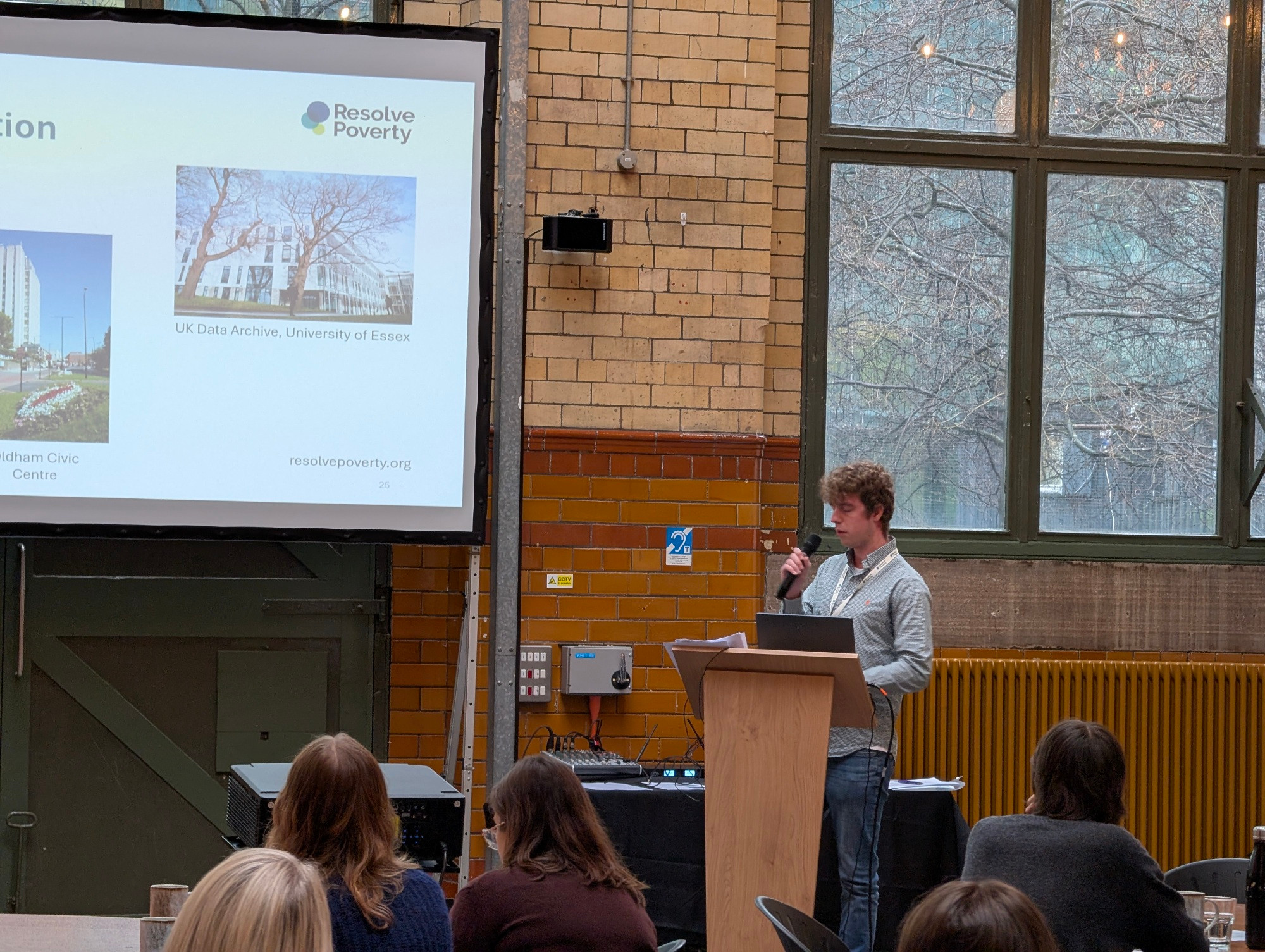
Recently, I had the privilege of speaking on behalf of Resolve Poverty at the UK Data Service Impact event ‘Perspectives on Engagement and Impact‘ for Early Career Researchers, where I shared reflections on what meaningful engagement and impact look like in the anti-poverty sector.
Resolve Poverty is an independent, not-for-profit organisation working with local and regional public bodies and partners across the country to see an end to poverty. We believe in the power of places to boost living standards and create communities where everyone can thrive. Our vision is to maximise the impact of local responses to poverty in order to resolve poverty nationally.
In the anti-poverty sector, impact is achieved through income maximisation: supporting low-income households to maximise their financial resources so that they can enjoy a fulfilled life. To this end, we engage with a range of stakeholders – from the public, VCFSE, and private sectors – in a range of ways – such as events, standing meetings, and comms activities.
Our Annual Conference is a key means by which we engage stakeholders to achieve impact with and for those experiencing poverty.
In just under a month’s time, on the 18th and 19th March in central Manchester, Resolve Poverty’s 2026 Conference will bring together 300 delegates each day from across the UK to consider how we can build good lives for all through local, regional, and national action on poverty, under the broad themes of Hope, Aspirations, and Expectations.
Our two-day Conference is structured to consider the anti-poverty efforts on the ground that will shape the future of the UK; the choices made now will affect families for years to come. It represents a crucial opportunity for those working to end poverty to exchange ideas, influence debate, and strengthen action on the ground.
The first day will major on how national policy developments, including the national Child Poverty Strategy, are shaping local and regional action on poverty, with breakout sessions on a range of themes. Day two will then focus on practical initiatives that can impact on what really matters for families right now: household incomes and debt.
Keynote speakers will explore how income maximisation and debt support are central to helping people live dignified lives and realise their potential, as essential pillars of any serious anti-poverty strategy. Breakout sessions will consider the role of localities in maximising the financial resources available to households as the bedrock to living a good life, particularly for children and young people. Some of our day two speakers include:
- Deven Ghelani, Policy in Practice, CEO
- Josephine McCartney, Childhood Trust, CEO
- Rachael McGruer, Deputy Director of the Scottish Child Poverty Strategy
The role of data in supporting local and regional anti-poverty action will come to the fore in day two, with a specific breakout session focusing on its untapped potential for local and strategic authorities to deliver better outcomes with and for those experiencing poverty.
During the session, we will hear how you can use data innovatively – whether that is deciding which services should be commissioned, or how policy should be designed, or how impact is evaluated – to better support households in need of financial support. In recognition that local authorities do not hold all the data they need to support low-income households to pursue a better standard of living, local authority representatives will provide practical advice on how to overcome data sharing obstacles and proactively support households to claim their full benefit entitlements. There will be opportunity during the session for participants to engage with our crack team of experts and discuss how to better utilise data in your role to support those experiencing poverty.
At Resolve Poverty, we are clear that better data sharing would enable local and regional government to provide effective routes of poverty for many more households. We will reaffirm our calls for national government to devolve the data – set out in a previous Data Impact blog – and consider how we can use our collective strength to be the change we want to see.
Tickets are nearly sold out but if you would like to join us, we are offering a 10% discount for group bookings (two or more tickets). Contact us to get the discount code.
We hope you can join us for what promises to be a valuable time for colleagues across sectors and across the nation to come together and consider how we can all play our part in supporting those experiencing poverty to live a good life.
About the author
Tom is a Policy Officer at Resolve Poverty, focusing primarily on how different levels of governance can design, implement and evaluate strategic responses to poverty.
To this end, he develops policy ideas, conducts qualitative and quantitative research, and delivers consultancy and training for bodies to more effectively tackle poverty. Prior to joining Resolve Poverty, Tom completed a Public Policy MSc at UCL and a degree in Politics, Philosophy & Economics (PPE) at the University of Manchester. Tom is determined that the institutions that govern us, the public services that provide for us, and the public policies that shape our lives should recognise and execute their role in addressing poverty.
Other stories you’ll find interesting
Comment or question about this blog post?
Please email us!